What are the warning signs of cancer?
Category : Non-Hodgkin Lymphoma (NHL) | Sub Category : Non-Hodgkin Lymphoma (NHL) Posted on 2026-03-26 14:16:55
You never really notice the signs or you know it but you don’t allow yourself to believe that it could be cancer. Of course, who would want to believe the symptoms they are facing could be cancer, right?
My grandfather was a fit, wise and the most courageous man I’ve ever known. He used to walk and exercise every morning. I along with my cousins used to go with him, we used to get tired but not him. He used to all of this at the age of 73. He always kept himself busy. Be it groceries shopping or any other work, he always used to prefer walking. Let’s just say he was too fit for a 73 year old man.
He started complaining about back aches. Nothing major just slight pains. He had back problems back when he was young. So he used to go for massages or used hot water bags. He thought it’s just a normal pain which he used to get in the past. This continued for around 8-9 months, no one really noticed anything. He was fit and normal. The only issue was the back pain which everybody ignored as just another normal pain. In the afternoon of one fine day in the month of October 2014, he complained about dizziness. He vomited everything he ate that day and barely had any strength to get up and sit. He was taken to the hospital. All the needful tests were done. Turns out his cancer had spread to his pancreas, liver, spines and operation was not an option because it was too late. He started his chemotherapy. He was responding well till his 4th chemo, but the 5th chemotherapy made his condition much worse. We knew, there was no Hope from here on. From a fit and healthy man who never preferred cars or public transport to a man who couldn’t even get up and walk on his own. It was unbearable to watch him suffer. On 26th of April, he lost his battle. I’ll never forget how bravely he kept fighting the losing battle.
How does cancer develop?
Our body is composed of billions of cells that, when united, form tissues and organs. The normal functioning of cells or tissues depends on a balance established between cell proliferation and cell death, which occurs in an orderly and natural manner.
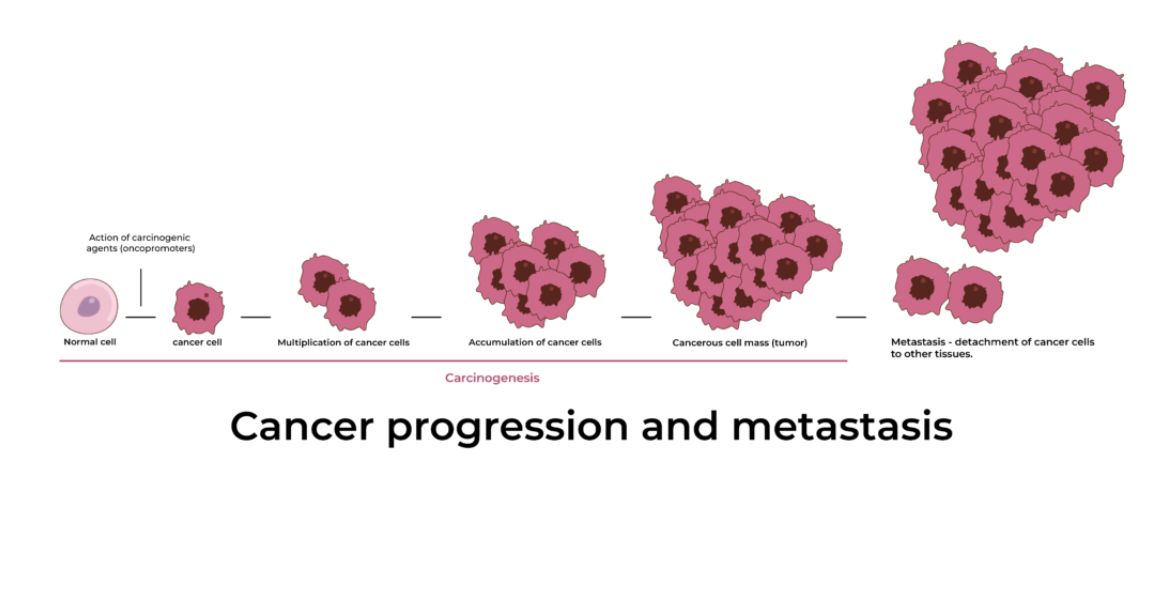
When this balance between cell multiplication and cell death is disrupted, cells start to multiply abnormally, creating a mass of disorganized cells called a tumor. This occurs due to a genetic mutation, i.e., a alteration in the DNA of the cell, which causes it to receive incorrect instructions for its functioning. These genetic mutations are responsible for the generation of cancer cells and are present in all types of cancer.
The process of transforming a normal cell into a cancer cell is called carcinogenesis. Generally, this process occurs slowly, but there are various carcinogenic agents that can accelerate the process of cellular differentiation and tumor formation. As cancer progresses, cancer cells can detach from the tumor, penetrate the blood vessel walls, enter the bloodstream, and spread to other tissues distant from the site of origin. This process is called metastasis.
Cancer that has undergone metastasis is referred to as metastatic tumor. The metastatic cells retain the cellular characteristics of their site of origin, not of the organ or tissue where they are located. This is important for the treatment of the tumor. For example, if prostate cancer spreads to the liver, it is still called metastatic prostate cancer because that is where it originated.
There are also cases of cancers unknown primary (CUP), where it is not possible to determine the origin of the cancer because only the metastases are found in diagnostic tests.
Is every tumor malignant?
No, there are benign tumors as well. They grow slowly and do not have the capacity to invade other tissues. These tumors can cause discomfort if they grow too large and press against other organs or tissues. In most cases, they can be removed through surgery.
Every malignant tumor generate metastases?
Not necessarily. The ability of a malignant tumor to generate metastases depends on its stage of evolution and aggressiveness. The earlier a malignant tumor is detected, the lower the chances of it reaching a metastatic stage.
Causes of cancer and how to prevent it.
As mentioned earlier, there are different types of cancer, and it is often difficult to determine the exact cause of their development. We can divide the factors that influence cancer development into two types:
- Internal factors of the patient, such as hereditary diseases (passed from parents to children) and the individual’s immune system issues (immunosuppressed, for example).
- External factors, which are factors that influence a person’s life but are not inherent to them, such as pollution, infections, solar radiation, as well as the person’s lifestyle, such as smoking, sedentary behavior, etc. External factors can be prevented and, in some cases, even avoided.
Several carcinogenic substances are known, which increase the speed of tumor formation and can be avoided, such as cigarettes and solar radiation. Here are some examples and how you can maintain a healthier lifestyle.
- Smoking: One of the biggest villains to our health is smoking. It contains various substances that can influence the development of cancer.
- Exposure to solar radiation: Excessive exposure to ultraviolet rays is harmful to our bodies and can cause skin cancer. Use sunscreen and avoid exposure during peak sun intensity hours.
- Alcohol: It is a risk factor for the development of various types of cancer, such as oral and tongue cancer. In addition to causing various other harms to the body when consumed excessively.
- Sedentary lifestyle and poor diet. Maintaining healthy habits such as regular physical exercise and consuming natural, less processed foods, and a balanced diet brings various health benefits.
- Occupational factors. Some professions are more exposed to carcinogenic agents, such as polluted air, radiation, chemicals, etc.
Diagnosis of Cancer
Each cancer can have different specificities, both in terms of aggressiveness and how it manifests, so one or more tests may be necessary to diagnose whether the tumor or nodule is malignant.
The initial diagnosis may involve changes in routine exams, nodules, pain, and sudden illness among possible symptoms.
At first glance, the patient’s family and personal medical history, predisposing factors to cancer, and environmental exposure are considered, such as whether the patient smokes, leads a sedentary lifestyle, or has been frequently exposed to carcinogenic substances.
Some types of cancer manifest with more physical evidence than others, such as skin, prostate, and breast cancer, for example. Often, a physical examination alone cannot clearly determine if the condition is cancerous, but it can serve as guidance for further steps in a more precise diagnosis. Imaging tests, tumor biopsies or molecular tumor markers can be used alone or in combination to provide the physician with more accurate information on whether the condition is cancerous or not.
- Imaging tests can detect tissue abnormalities, determine if the tumor or nodule is solid or cystic, delineate dimensions and the relationship with nearby structures because if a biopsy or surgery is indicated, these tests can help assess if more tissues will be affected.
- Biopsy is a very useful tool for diagnosis and is often indicated when there is suspicion of cancer. It involves removing a piece of tissue, which provides a much more detailed laboratory analysis of the nodule, which, in some cases, can determine whether that sample is cancerous or not.
- Molecular tests. From a collected sample of the tumor/nodule, can identify mutations in the patient’s genes and indicate whether the tumor is malignant or not.
Molecular tests offer various tools for the diagnosis, monitoring, prognosis, and treatment of cancer. For example, mir-THYpe full can accurately determine if a thyroid nodule is potentially benign or not based on the analysis of microRNA markers.
In addition, the test also analyzes prognostic markers of the nodule if the test result is potentially malignant, indicating whether the nodule is more or less aggressive, assisting in the planning of the extent and urgency of surgery that the patient will need in such cases.
Learn how molecular tests can aid in the diagnosis of thyroid nodules and medical management.
What is the treatment for cancer?
It is important to remember that the treatment depends on the type of cancer and the stage at which it is diagnosed, and the treatment plan is determined by the physician collaboration with the patient. Many cancers are curable, especially when detected at early stages, which is why it is important to consult with a doctor and undergo regular screenings in many cases. Here are some possible treatments:
- Surgery: Surgical oncology involves removing the tumor through an operation.
- Radiation therapy: This treatment option uses ionizing radiation to destroy tumor cells or prevent their multiplication. It is often recommended after surgery to complement the treatment.
- Chemotherapy: It involves using medications to combat the tumor. The substances enter the bloodstream and are carried throughout the body, aiming to destroy and prevent the multiplication of tumor-forming cells.
- Immunotherapy: It is a type of biological treatment that aims to fight the advancement of the disease by activating and enhancing the patient’s own immune system. Its interaction with other types of treatment can be even more effective.
- Bone marrow transplant: This type of treatment is usually used for leukemias and lymphomas. It involves replacing the diseased bone marrow with a healthy one. This exchange is done through a transplant from a donor (allogeneic transplant) or from the patient themselves (autologous transplant).
Each patient has their own unique situation, and the treatment should be carried out with the guidance of healthcare professionals and in a personalized manner. This text is for informational purposes only and does not replace a medical consultation.
Leave a Comment:
SEARCH
Categories
Recent News
- NGO Highlights Stigmatization of Breast Cancer Survivors, Launches Empowerment Program in Nigeria
- HEALTH CRISIS: Chronicles of Cancer Survivors in Nigeria
- A Turning Point in Cancer Care in West Africa: The Promise of SBRT
- Cancer Survivors Share Their Stories as Oncologist Offers Support Through New Book IN Nigeria
- Medical Expert Advocates Early Screening to Combat Rising Prostate Cancer Cases in Nigeria
- Cancer Struggles
- Experts urge Nigerians to embrace early screening, HPV vaccine
- FG Launches Free Cancer Screening for 1,000 Residents in Ebonyi
READ MORE
2 months ago Category : Non-Hodgkin Lymphoma (NHL)
NGO Highlights Stigmatization of Breast Cancer Survivors, Launches Empowerment Program in Nigeria
Read More →2 months ago Category : Colorectal Cancer
HEALTH CRISIS: Chronicles of Cancer Survivors in Nigeria
Read More →2 months ago Category : Colorectal Cancer
A Turning Point in Cancer Care in West Africa: The Promise of SBRT
Read More →2 months ago Category : Tell us your Story